Roofing ventilation and energy efficiency in Columbia, MD are tied together more tightly than most homeowners realize: a poorly vented attic drives up cooling bills every July and sets up the exact conditions for ice dams every January. Get the airflow wrong and you pay for it twice, once on the utility bill and once on roof and gutter repairs. This guide walks through the vent types, code minimums, and insulation pairings that actually move the needle for Howard County homes.
Why Roof Ventilation Matters for Energy Efficiency in Columbia, MD
An attic without proper airflow becomes a heat trap in summer. Your air conditioner runs longer just to hold a comfortable temperature downstairs, and that extra runtime shows up directly on your bill.
Winter flips the problem from discomfort to damage. Warm, moist air that can't escape condenses against the roof deck, soaks insulation, and encourages mold growth. In cold weather, moisture condenses on cold surfaces, and that moisture can encourage biological pollutants to grow. That same trapped heat also melts snow unevenly, which refreezes at the eaves and forms ice dams heavy enough to tear off shingles and damage gutters. If ice dams have already pulled a gutter loose, a gutter repair visit alongside the ventilation fix prevents the same damage next winter.
Federal guidance backs this up directly: keeping attics dry and well-ventilated helps ensure durability and avoid moisture problems, while also lowering heating and cooling costs. Getting roofing ventilation and energy efficiency working together in Columbia, MD means solving both sides of the seasonal swing, not just the one that's bothering you right now.
Warning Signs Your Attic Ventilation Is Failing
Watch for these signs. Any one of them is worth a closer look, and two or more together usually means airflow is the root cause.
- Upper floors stay noticeably hotter than the rest of the house
- Visible condensation or frost on the underside of the roof deck
- Ice dams or heavy icicles forming along the roofline
- Curling, cupping, or buckling shingles
- Musty odors or visible mold near the attic access
Hot upper floors mean your AC is losing a fight against trapped heat. Curling shingles usually mean the deck has baked under that same trapped heat for years, which is also what's been quietly driving your cooling costs higher. If you're seeing more than one of these, get a free estimate before a ventilation problem turns into a full deck or shingle replacement.
How Much Ventilation Does Your Attic Actually Need?
This is the part most local guides skip, and it's the difference between guessing and knowing. National code sets the minimum net free ventilating area at 1/150 of the area of the vented space. A narrower exception allows 1/300 provided certain conditions are met, including a Class I or II vapor retarder installed on the warm-in-winter side of the ceiling in specific climate zones. Howard County may apply its own amendments to that baseline, so confirm current requirements with your building department before finalizing a project.
Here's what that math looks like on a typical Columbia house. For a 1,800-square-foot attic floor, the 1/150 rule requires 12 square feet of net free ventilation area, or 1,728 square inches once converted. That total gets split between intake and exhaust, because intake area should always be equal to or more than exhaust area, or intake air may be pulled from the interior of the building through openings in the ceiling like can lights or attic access doors. Skip this step and you can end up with a roof full of vents that still isn't balanced.
Types of Roof Vents: Intake vs. Exhaust
Every roof vent falls into one of two jobs: pulling cooler air in, or letting hot, moist air out. A balanced system needs both.
- Soffit vents – mounted under the eaves, handle intake almost exclusively
- Ridge vents – run along the roof peak, the primary exhaust path on most modern homes
- Gable vents – mounted on attic end walls, work as exhaust but less efficiently without matching intake
- Static (box) vents – a simpler exhaust option for smaller or oddly shaped attics
- Powered attic fans – add mechanical exhaust where natural airflow falls short
| Vent Type | Role | Power Needed | Best Fit |
|---|---|---|---|
| Soffit vents | Intake | None | Nearly every home; pairs with ridge or gable vents |
| Ridge vents | Exhaust | None | Homes with straight roof lines; most common choice |
| Gable vents | Exhaust (sometimes intake) | None | Older homes with gable-end walls |
| Static/box vents | Exhaust | None | Smaller attics or as a ridge-vent supplement |
| Powered attic fans | Exhaust | Electric or solar | Attics with limited natural airflow, used selectively |
The Ridge-and-Soffit Combo: Still the Default for Most Columbia Roofs
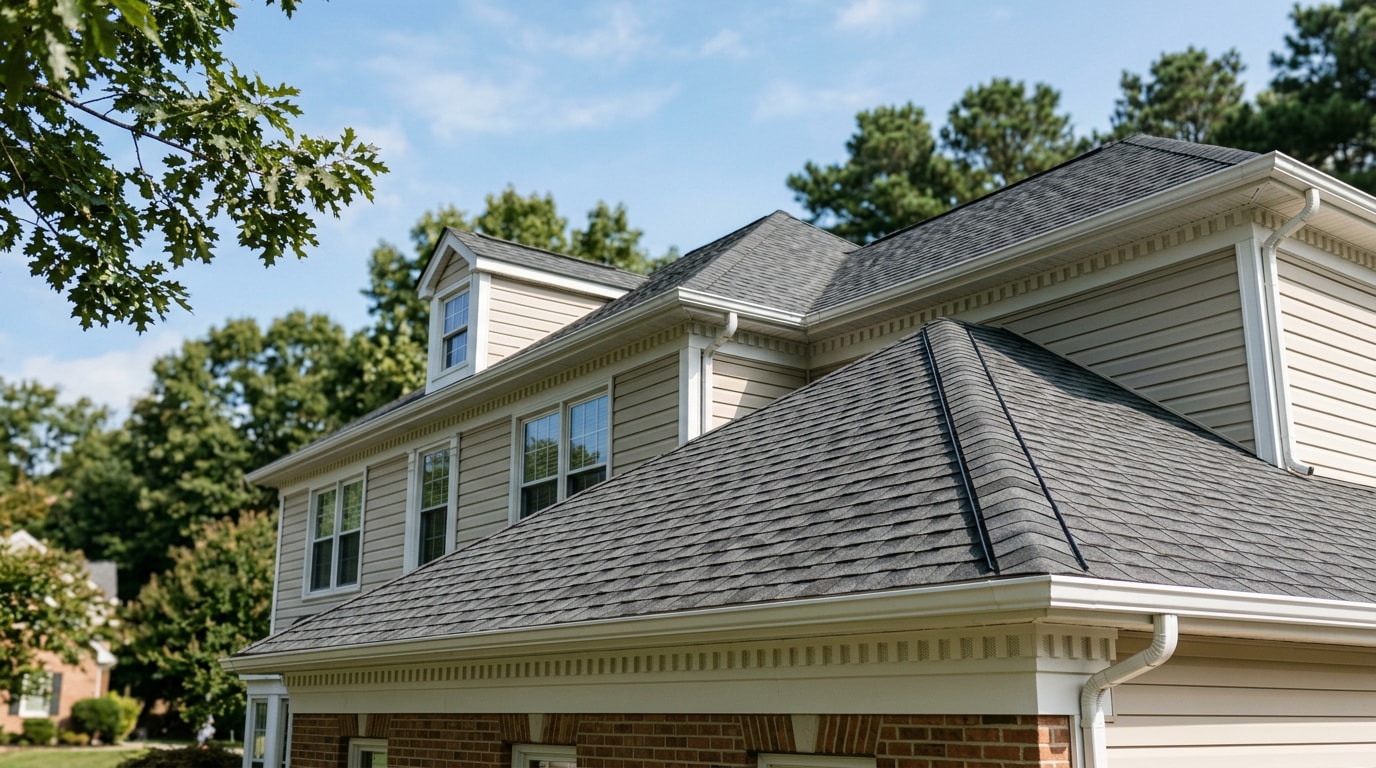
A combination of continuous ridge vent along the peak of the roof and continuous soffit vents at the eaves provides the most effective ventilation for the vast majority of Columbia homes. It runs passively, with no moving parts and no electricity cost, which keeps long-term maintenance close to zero. If you're already planning a roof replacement, adding or upgrading ridge and soffit vents at the same time costs far less than retrofitting them later.
Why We Don't Default to Powered Attic Fans
Powered attic fans sound like a stronger fix, but they're not our first recommendation, and this is where national research actually pushes back against the sales pitch. Powered roof ventilators are not recommended because they consume more energy than they save in most residential applications. They can also depressurize the attic enough to pull conditioned air out of the living space through ceiling gaps, which quietly raises your HVAC load instead of lowering it. We reserve powered fans for attics where passive ridge-and-soffit venting genuinely can't move enough air, not as a default upgrade.
Key Considerations for Columbia, MD Homeowners
Columbia's mix of mature tree cover and humid summers adds a local wrinkle. Heavily shaded roofs stay cooler, but shade also traps moisture longer after rain, which raises the risk of rot and mold if airflow isn't sufficient.
Ventilation and insulation are a package deal, not separate projects. A well-ventilated attic over thin or gapped insulation still leaks conditioned air, and an over-insulated attic without enough airflow traps moisture instead of releasing it. Homeowners in the heavily wooded parts of our Columbia, MD service area should have both systems evaluated together, not one at a time.
Pairing Insulation With Your Ventilation System
Ventilation moves air; insulation slows heat transfer. Neither one fixes the other's job, which is why a ventilation upgrade without an insulation check often underperforms.
Spray Foam Insulation
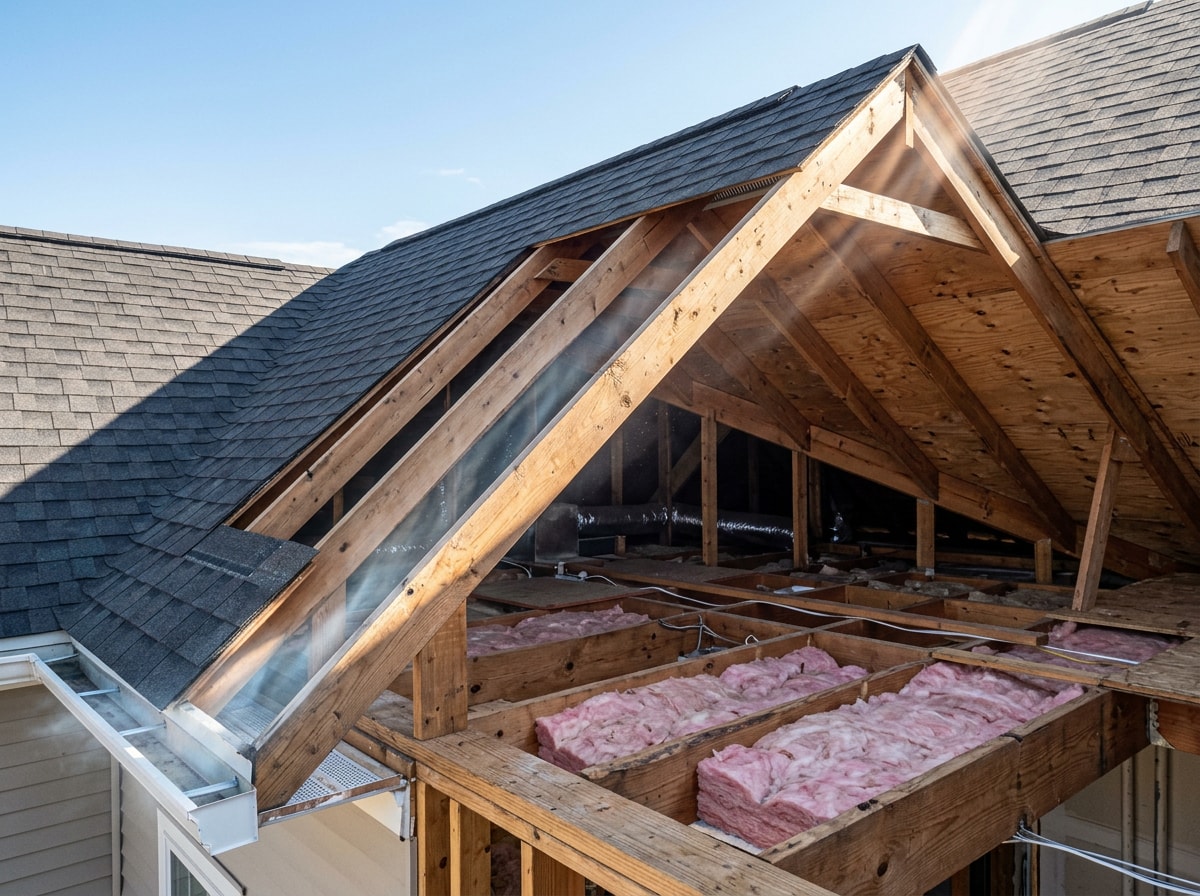
Spray foam comes in open-cell and closed-cell varieties, with closed-cell offering a higher R-value per inch at a higher material cost. It seals gaps that air slips through, which matters because even a well-ventilated attic loses efficiency if the insulation layer itself is leaky.
Blown-In Insulation
Blown-in insulation, typically cellulose, fiberglass, or mineral wool, is machine-applied to fill irregular spaces and hard-to-reach cavities. It's a practical option for topping off existing insulation or covering awkward framing where batts don't fit cleanly.
Batt Insulation
Batt insulation comes in pre-cut fiberglass panels sized for standard stud and joist spacing. It's one of the more affordable options for unfinished walls, floors, and ceilings, and straightforward to install in open, accessible spaces.
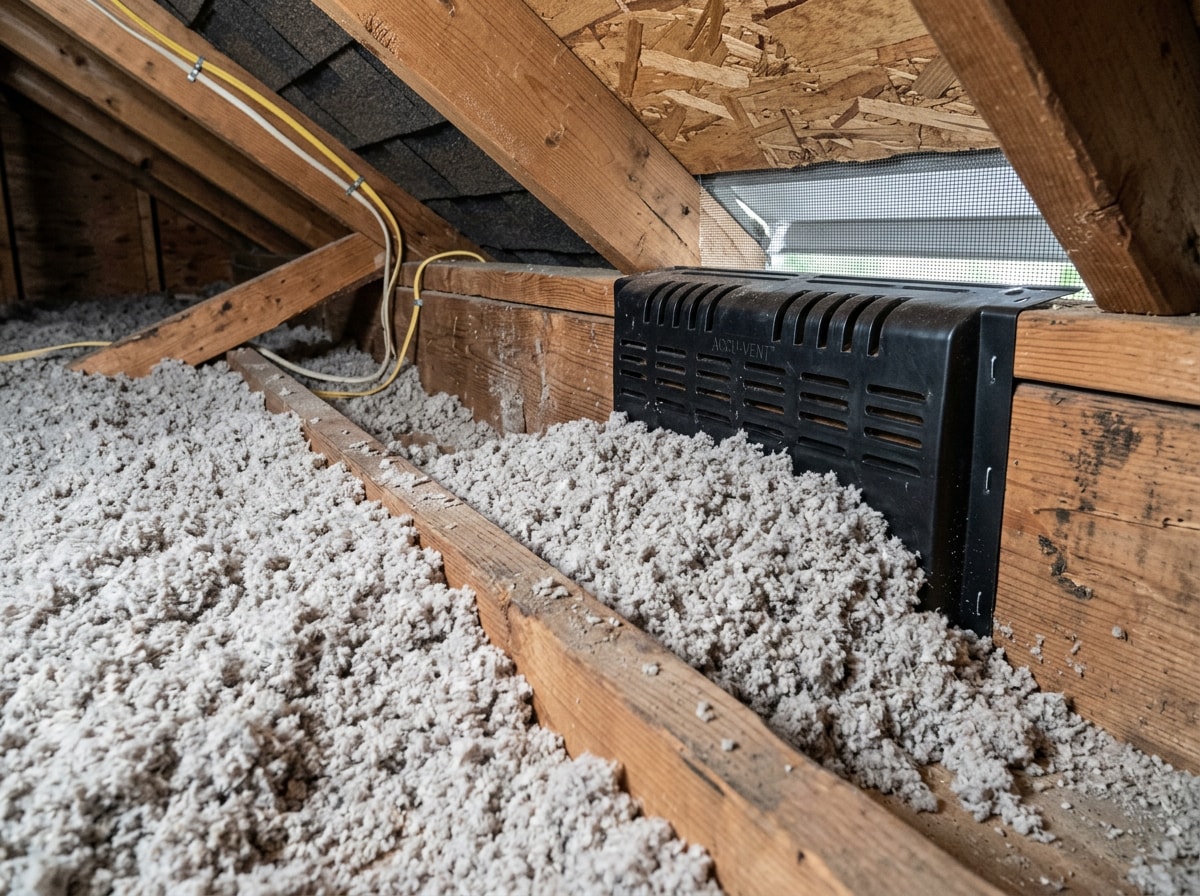
The payoff is well documented. Sealing air leaks around your home and adding insulation can help your home be more comfortable and energy efficient, providing up to a 10% savings on your annual energy bills. Pairing that work with balanced ventilation, rather than tackling either one alone, is what actually moves your energy bill.
Strategies for Improving Roof Ventilation and Energy Efficiency
Two upgrades make the biggest difference:
- Add or top off attic insulation to reduce heat transfer through the ceiling plane.
- Balance intake and exhaust vents, adding static or powered exhaust only where passive airflow genuinely falls short.
Neither fix works as well alone as the two combined, and both are worth having checked at the same time rather than reacting to one symptom at a time.
Protect Your Columbia Home: Schedule a Ventilation and Insulation Check
Catching ventilation problems early protects more than your energy bill. It extends roof lifespan, keeps indoor air quality healthier, and prevents the kind of moisture damage that's expensive to repair later.
If any of the signs covered earlier sound familiar, a professional roof inspection can confirm whether ventilation is the root issue before you spend money on the wrong fix. Get a free estimate and we'll give you a clear read on your attic's current ventilation and insulation setup. You can also browse our full range of exterior services from the Eagle Bay Builders homepage.
FAQ
Does attic ventilation really lower energy bills?
Yes. Proper ventilation reduces attic heat buildup, easing AC strain in summer. Sealing air leaks and adding insulation alongside that ventilation can provide up to a 10% savings on annual energy bills.
What is the best type of roof ventilation for energy efficiency?
For most Columbia homes, a ridge-and-soffit combination offers the best balance of passive airflow, low maintenance, and year-round performance without added electricity costs.
How much insulation do I need for ventilation to work properly?
Insulation and ventilation need to be balanced together. Too little insulation wastes energy. Too much without adequate airflow traps moisture and can cause rot or mold.
Can a house have too much attic ventilation?
Yes, in a sense. More vents alone don't help if intake and exhaust aren't balanced. Intake area should always be equal to or more than exhaust area, or intake air may be pulled from inside the building through ceiling openings like can lights.
Are powered attic fans worth it in Columbia, MD?
Usually not as a first move. Powered roof ventilators are not recommended in most cases because they consume more energy than they save, and they can pull conditioned air out of your living space. Passive ridge-and-soffit venting handles most Columbia attics without the added equipment or electric cost.
What happens if my attic has no ventilation at all?
Heat and moisture both build up with nowhere to go. Expect higher summer cooling bills, faster shingle aging, and a much higher risk of ice dams and attic condensation during the winter.
This guide was prepared by the roofing and exterior specialists at Eagle Bay Builders, a licensed contractor serving Columbia and the surrounding Howard County area. Our crews have re-ventilated enough older attics to know that a simple soffit vent fix regularly resolves ice dam complaints homeowners had spent years blaming on their gutters. Questions about your own attic setup? Contact our team to schedule a look.