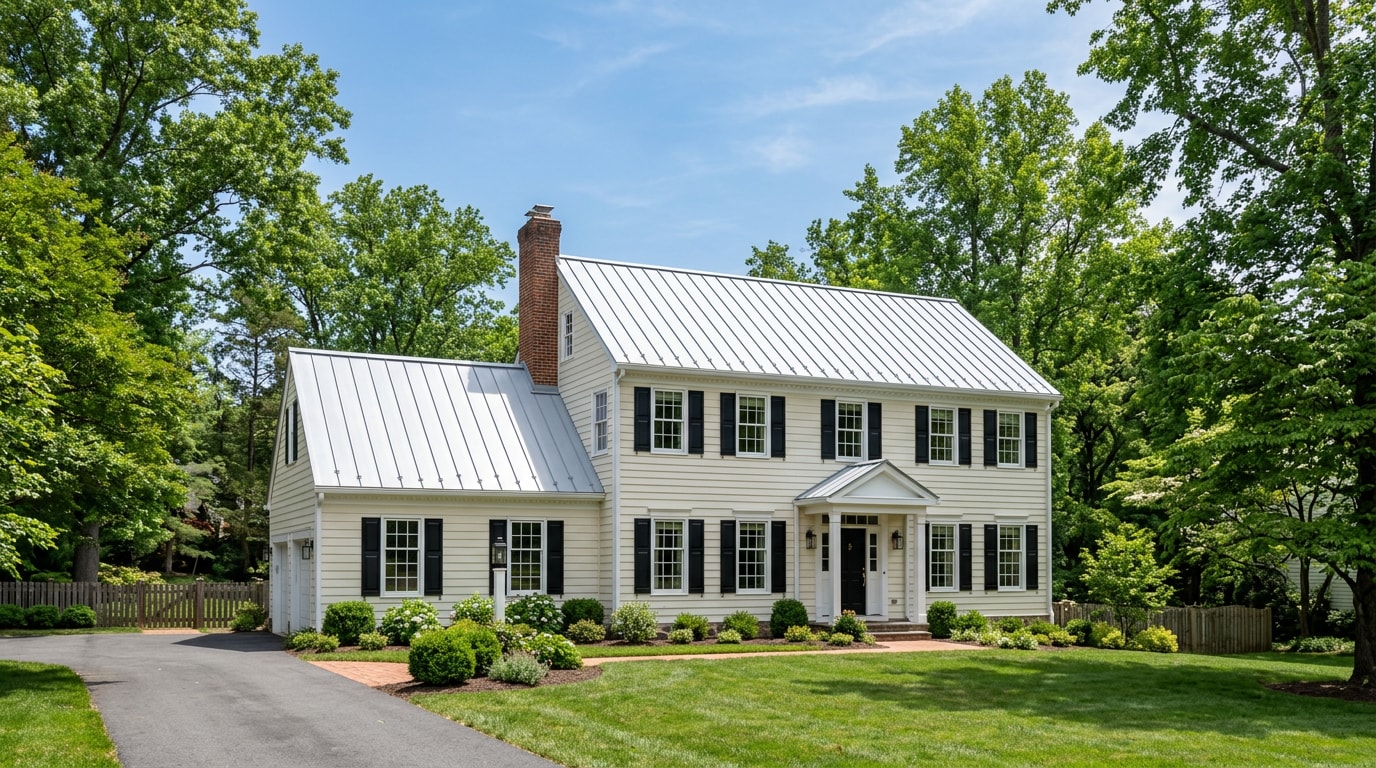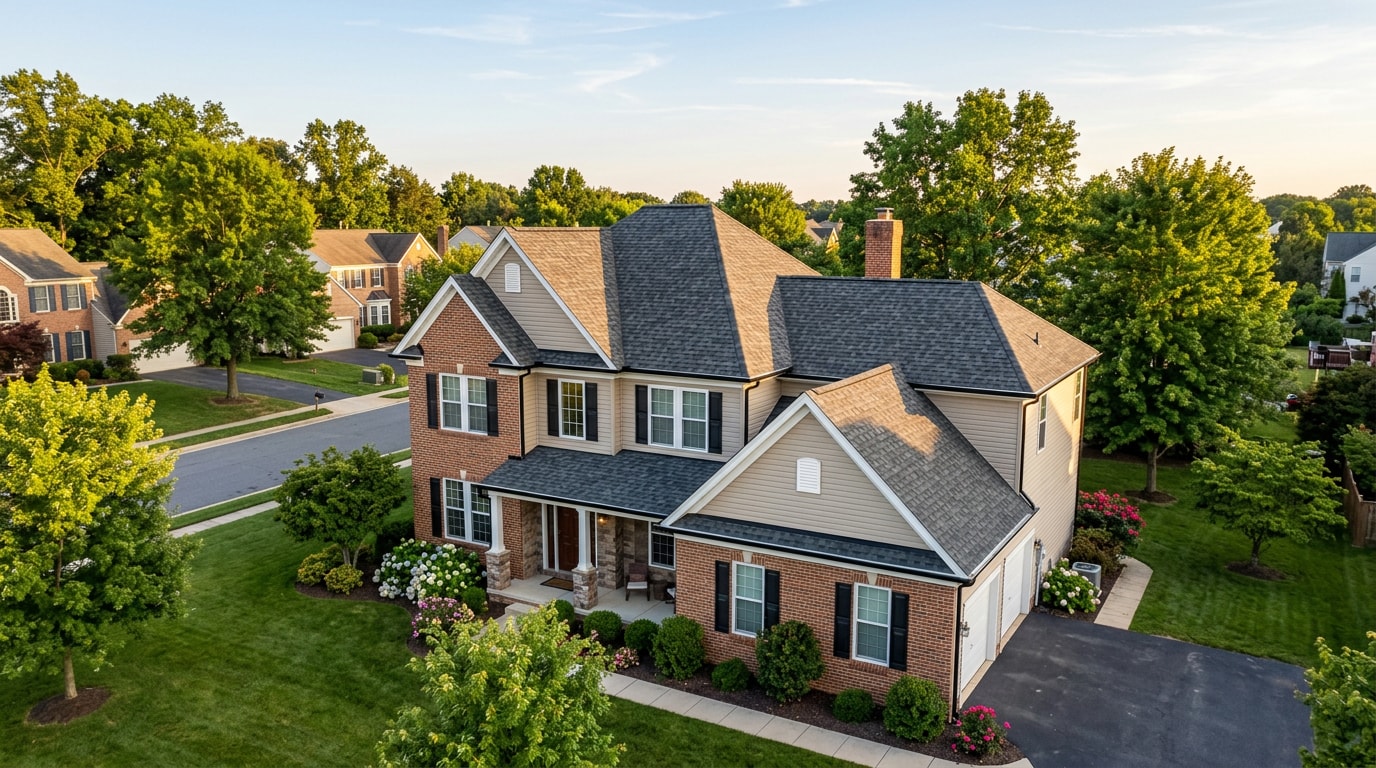
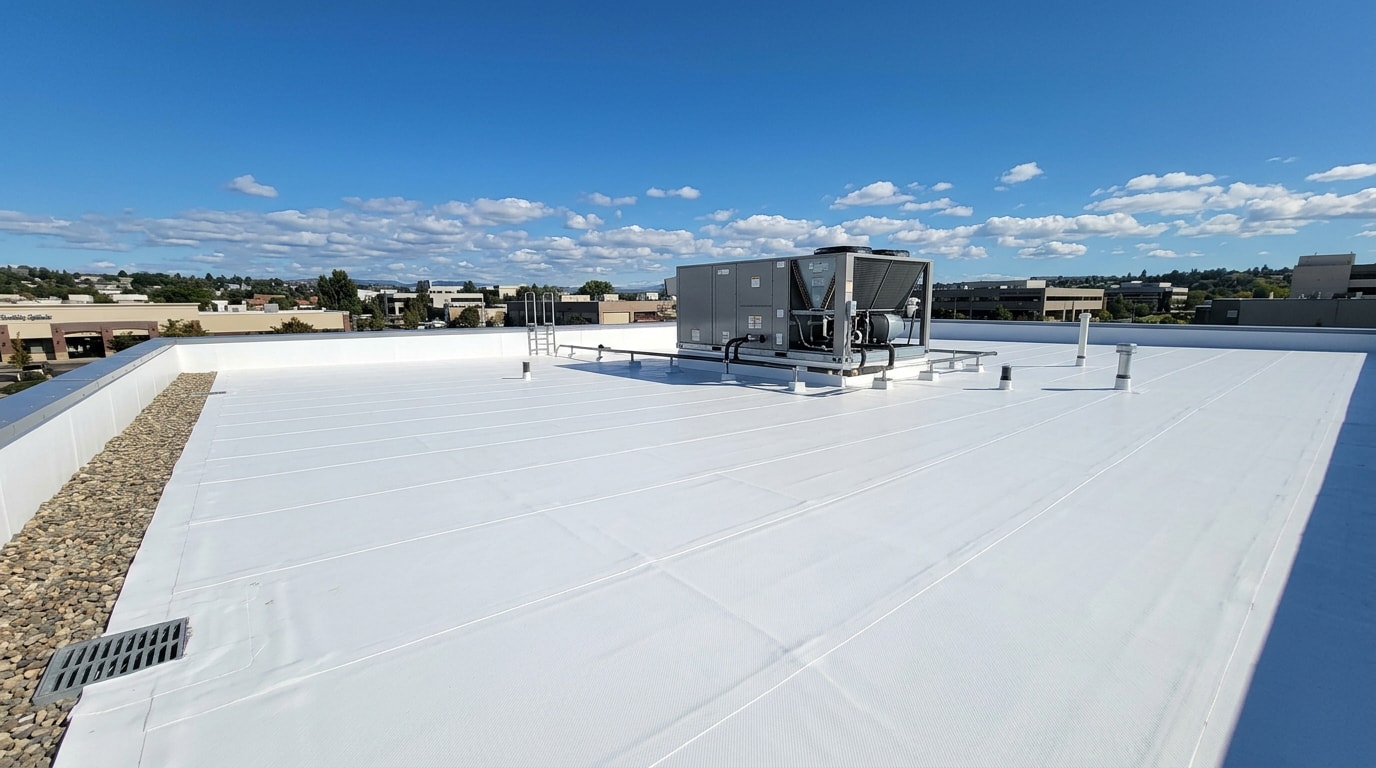
TPO roof repair in Crofton, MD keeps Anne Arundel County's flat-roofed commercial and multi-unit buildings watertight without the cost of a full tear-off. Our crews see the same failure pattern on nearly every service call: a lifted seam or a single puncture that got ignored until it turned into a ceiling stain. Catch it at the seam stage and repair stays cheap; wait, and you're pricing a replacement instead.
Signs Your Crofton Building Needs TPO Roof Repair Now
Most TPO problems show themselves before a full leak develops. Watch for:
- Blistering or peeling exterior paint near the roofline
- Interior ceiling or wall stains that spread over time
- Ponding water that doesn't drain within 48 hours
- Seams that have lifted, bubbled, or separated
- Membrane that looks shrunken or stretched tight at the edges
If you're checking more than one box, don't wait on it. An active leak during a storm needs our emergency roof repair team, while early-stage wear is best caught with a roof inspection before it spreads.
How Professional TPO Roof Repair Works
A proper TPO roof repair isn't a caulk-and-hope job. It's a two-part process: reseal the seam, then confirm the layers underneath didn't get wet.
Heat-Welded Seam Repair
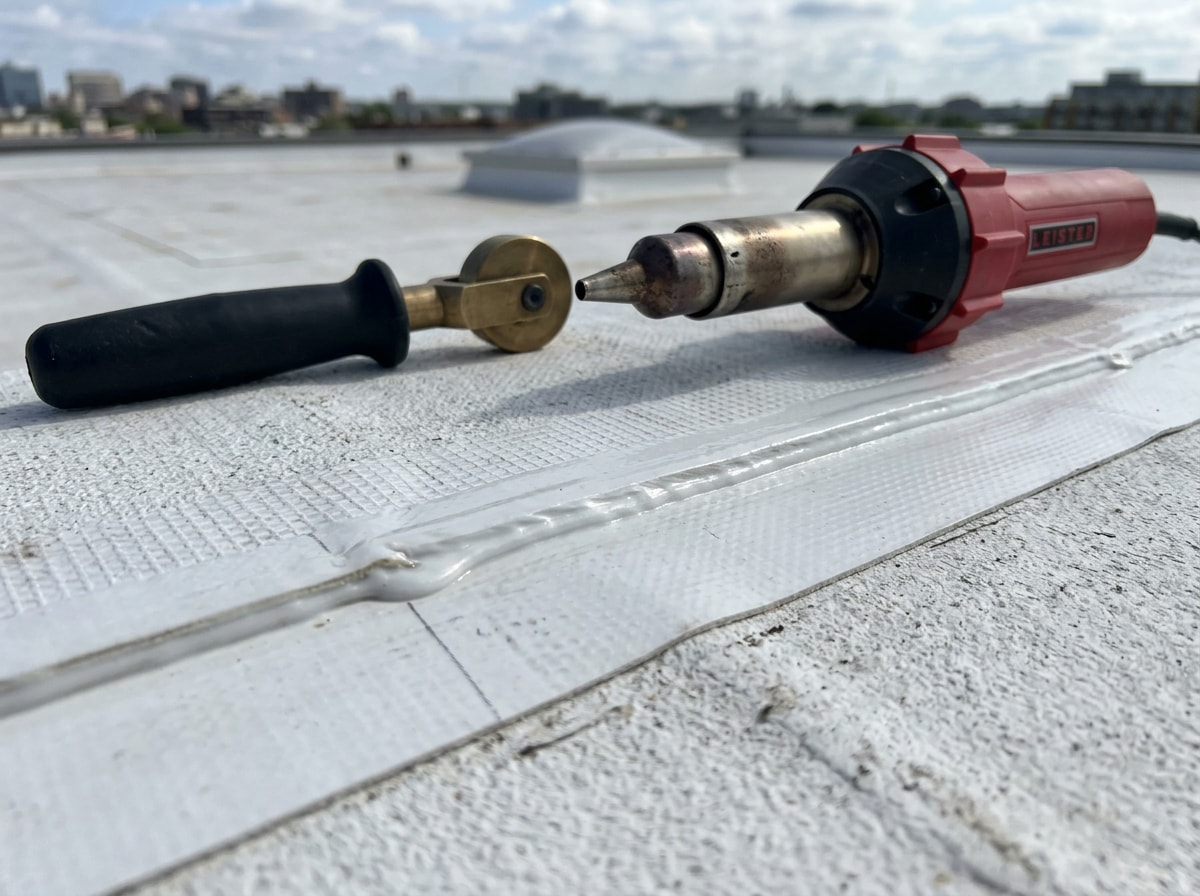
TPO's seams, not the membrane field, are its most common failure point. The fix is a heat gun or hot-air welder that fuses the TPO material at a molecular level, recreating a watertight bond instead of masking a gap.
Cheaper contractors sometimes rely on liquid sealants or caulk instead. Those patches can fail again within a season. Heat-welding is the industry-accepted method because it restores the membrane's original strength rather than covering the problem.
Finding the Real Leak Path
Water on a TPO roof often travels along the membrane surface before finding a weak point. That means the visible ceiling stain and the actual entry point can be several feet apart.
Once the leak path is traced, the insulation board and underlayment beneath the membrane get checked for saturation. Wet insulation loses R-value and can't be dried in place, so damaged sections get cut out and replaced before a new TPO patch is welded over the repair. Skipping that step is the most common reason a "repaired" roof leaks again.
Repair or Replace? What Actually Decides It
Most local roofing pages skip this part, but it's the question that matters most. The honest answer isn't about how many patches a roof has had. It's about seam condition, membrane age, and how far water has already traveled.
| Signal | Usually Points to Repair | Usually Points to Replacement |
|---|---|---|
| Seam condition | A few isolated lifted or separated seams | Seams failing across multiple roof sections |
| Membrane age | Under roughly 15 years | 20+ years, brittle or UV-cracked |
| Wet insulation | Limited to one area | Widespread saturation under the membrane |
| Ponding water | Localized, slow to drain | Chronic, covers large sections of the roof |
A roof inspection is the only reliable way to tell which column your building falls into. If the damage has spread past the repair column, our roof replacement team can walk through options before committing to a full tear-off.
Why TPO Is Maryland's Default Commercial Membrane
TPO resists mold, dirt, tears, and punctures better than many older single-ply systems, and it flexes with a building's natural expansion and contraction instead of cracking. That flexibility matters in Maryland, where winter-to-summer temperature swings put real stress on flat roof assemblies.
Membrane Thickness Matters
Most commercial installations use 45-mil, 60-mil, or 80-mil TPO, with thicker sheets generally offering better puncture resistance and longer service life. The construction of GAF's EverGuard TPO membrane has remained unchanged for more than 20 years, with sales topping 6 billion square feet , which is a useful benchmark for how proven the material is before you trust it on a repair patch. You can review the full EverGuard TPO membrane specifications for thickness and performance details.
Flat Roofs Pair Naturally With TPO
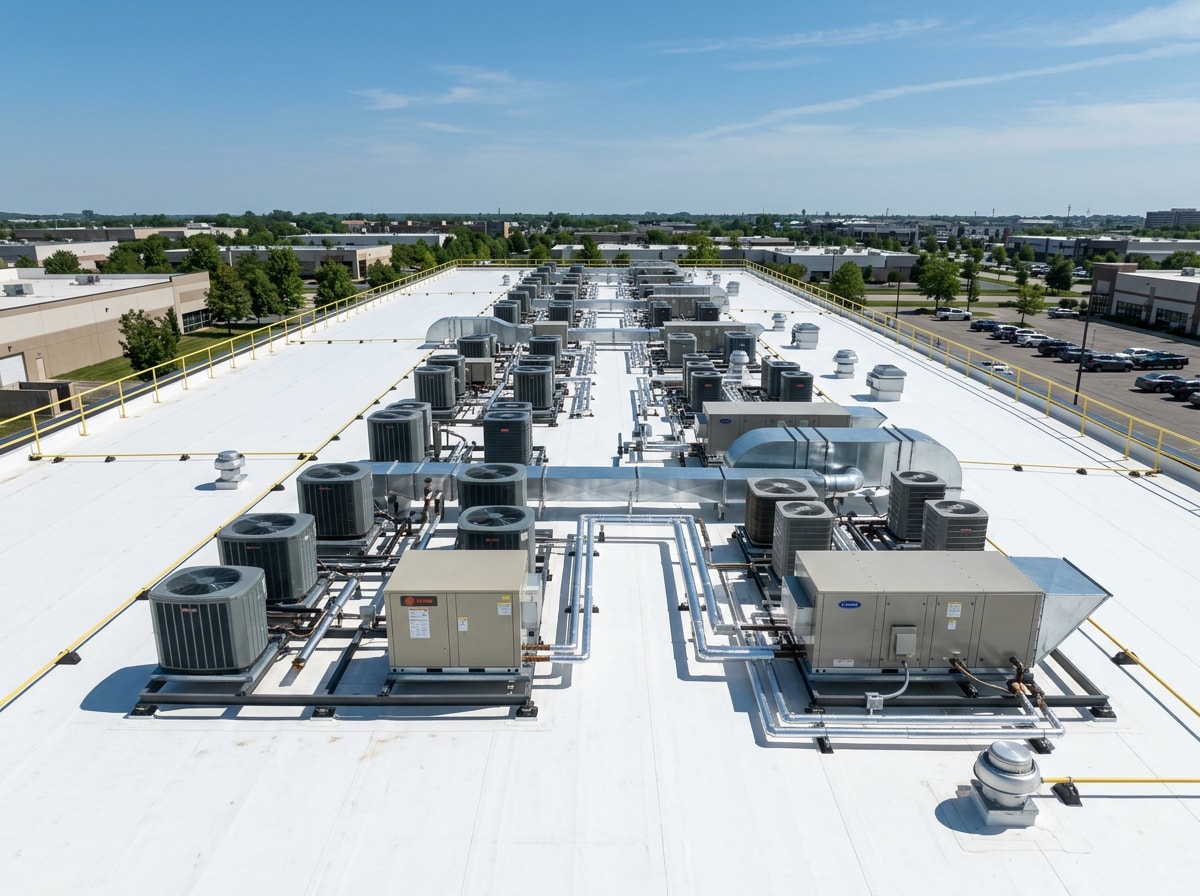
Flat and low-slope designs dominate commercial construction because they cost less to build over large spans and leave usable rooftop space for HVAC equipment. That's a big part of why commercial roof design in Crofton so often pairs flat roofing with a TPO membrane instead of a sloped, shingled alternative.
Benefits of Timely TPO Repair
Extends Roof Lifespan
Small punctures and lifted seams rarely stay small. Left alone, they let moisture work under the membrane and compromise the insulation layer underneath. Addressing issues early extends the roof's service life and can push a replacement years further out.
Improves Energy Efficiency
A well-maintained TPO roof reflects a significant share of solar heat instead of absorbing it. Field tests in California and Florida have shown that applying light-colored, reflective roofing to poorly insulated roof systems can reduce cooling energy use and peak demand by more than one-third , according to Department of Energy research.
That reflectivity isn't free in every season, though. Because cool roofs reflect sunlight and reduce solar heat gain into a building, they may increase energy use during winter months in cold climates, though this heating penalty is typically offset by summer cooling savings , per the EPA. For more on how roof systems affect year-round energy performance, see our guide to roofing ventilation and energy efficiency.
Protects Property Value
A clean, intact TPO surface tells tenants, buyers, and inspectors that a building has been cared for. A patched-looking or stained roof raises questions before a buyer even steps inside.
Permits and Local Rules in Anne Arundel County
Roofing work in Crofton can require a permit depending on scope. Replacement of shingles only does not require a permit, but replacement of both sheathing and shingles, or trusses, requires a building permit under Anne Arundel County rules, and the same logic applies to commercial deck or insulation work beneath a TPO membrane. Before major repair work starts, it's worth confirming scope with the county's permitting office directly, or ask your contractor to handle that step.
For full local coverage details, visit our Crofton, MD service area page. See how Eagle Bay Builders approaches every roofing project across Anne Arundel County, or request a free estimate for your building.
FAQ
Are there any temporary fixes for a roof leak?
A tarp or roofing sealant can slow an active leak for a few days, but it's not a lasting fix. TPO needs a proper heat-welded seam repair to stop water infiltration for good, so treat any temporary patch as a bridge to a permanent repair, not a solution on its own.
Can a TPO roof be repaired instead of replaced?
Usually, yes. Most seam failures, isolated punctures, and localized wet insulation are repairable. Replacement becomes the better call when seams are failing in multiple areas, the membrane is past 20 years old, or ponding and saturation have spread across large sections of the roof.
Do I need a permit for TPO roof repair in Anne Arundel County?
It depends on scope. Surface-level membrane and seam repairs typically don't trigger a permit, but work that involves replacing deck sheathing or insulation boards usually does. Check with Anne Arundel County's permitting office or have your contractor confirm before work starts.
How long does a TPO roof last?
A properly installed and maintained TPO roof typically lasts 20 to 30 years. Actual lifespan depends on membrane thickness, installation quality, and how consistently the roof gets inspected and repaired. Thinner 45-mil membranes tend to wear faster than 60-mil or 80-mil systems.
How much does TPO roof repair cost?
Small to medium repairs, like seam resealing or patching a localized puncture, cost a small fraction of a full replacement. Exact pricing depends on roof access, damage extent, and material condition. A written estimate from a local contractor gives the clearest number for your specific building.